Introduction
The algorithm crash course covers the essential algorithm patterns and classic problems that appear across interviews. The goal is to solve medium-difficulty problems independently, not to memorize any particular list.
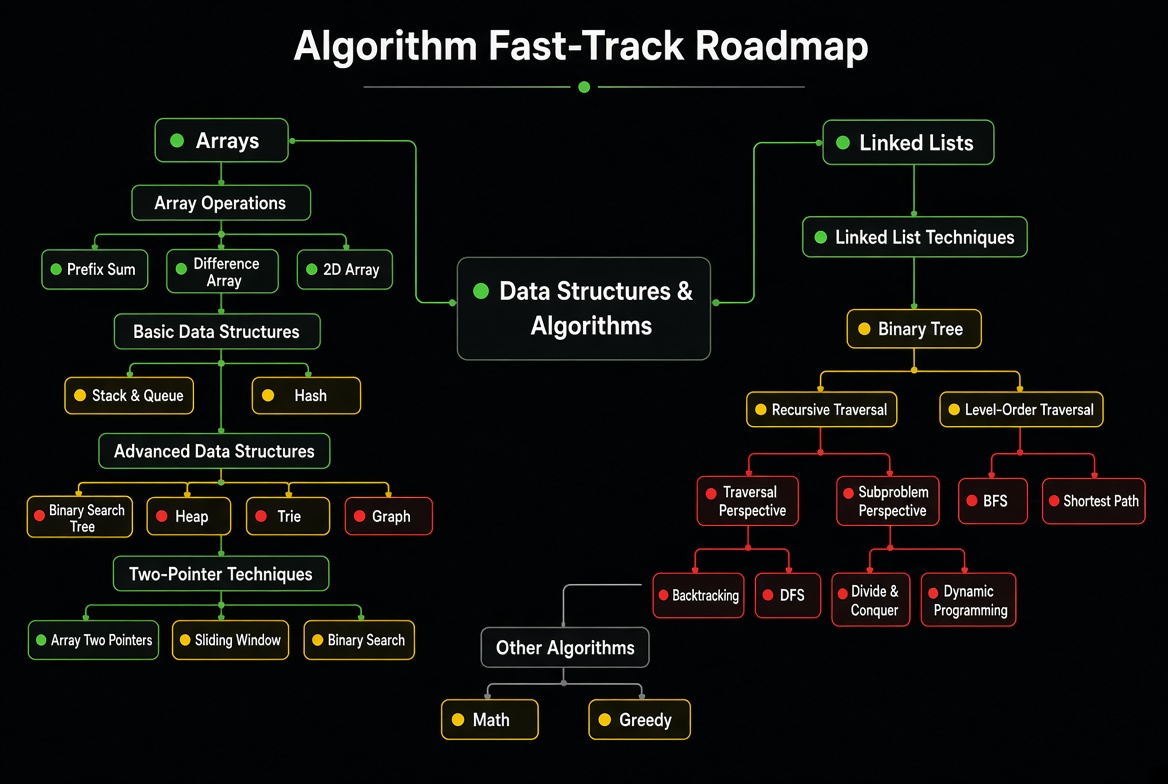
Learn the frameworks first. Once they are solid, any company list becomes a short review—typically a couple of hours rather than a multi-week grind. The core techniques are limited; mastery of the patterns is what matters.
Why This Approach Works
How can this crash course quickly improve your algorithm skills in a short time?
Template-driven.
Each technique is distilled into a clear framework. Exercises use the same process, so you build transferable skill rather than isolated memorization.
Progressive.
Advanced techniques are combinations of simpler ones. Starting with key data structures (especially binary trees) makes later techniques—particularly recursion—far more approachable. Foundations first make practice efficient.
Learn then practice.
Worked examples come before exercises. Understand the pattern, then implement it yourself.
Skipping frameworks to grind lists is a false economy. List grinding relies on luck (seeing the exact problem). Without the frameworks, harder or unfamiliar problems become difficult. Time spent on foundations is recovered later.
The catalog has two parts: a lighter data-structures section, followed by the core algorithm-practice section.
Suggested Time
Time estimates assume 1–2 hours of fragmented study per day and are intentionally generous. Dedicated blocks of time will be much faster. Treat them as guidance, not targets.
On the first pass, focus on understanding and reproducing the frameworks. Do not over-grind. Many points that feel unclear initially click into place once the overall structure is in place and you revisit them.
Get new posts by Nelson Lin
Subscribe to receive email notifications when a new article is published.